

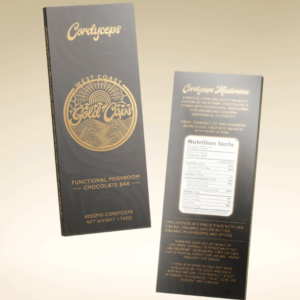
Lion’s Mane 4000mg West Coast Gold Caps Chocolate
Introduction to Lion’s Mane 4000mg West Coast Gold Caps Chocolate
Lion’s mane mushrooms are capturing attention across health and wellness circles, and for good reason. This distinctive fungus—named for its cascading, white tendrils that resemble a lion’s mane—has been used in traditional Chinese medicine for centuries, but modern research is finally catching up to understand what practitioners have long believed about its cognitive and neurological benefits.
What makes the 4000mg West Coast Gold Caps Chocolate formulation particularly intriguing is how it addresses one of the biggest challenges with functional mushrooms: bioavailability and consumption experience. While research from Memorial Sloan Kettering Cancer Center confirms the presence of bioactive compounds like hericenones, erinacines, and sometimes unpleasant taste of mushroom extracts. The chocolate delivery method isn’t just about palatability—it’s strategic. The combination of higher-dose extract (4000mg per serving) with a format that encourages consistent use creates a practical pathway for experiencing the cognitive support benefits that emerging studies suggest. However, it’s worth noting that while traditional use and preliminary research show promise, the scientific community continues to investigate exactly how these compounds work in human physiology and what optimal dosing looks like for different health outcomes.
What the Research Shows About Lion’s Mane
Scientific interest in lion’s mane supplements has surged over the past decade, with researchers examining this mushroom’s potential effects on brain health and cognitive function. Studies conducted on animals suggest that lion’s mane contains bioactive compounds—particularly hericenones, erinacines—that may stimulate nerve growth factor (NGF) synthesis, a protein essential for neuron development, and maintenance. Recent clinical research indicates potential benefits for mild cognitive impairment in older adults, though most human trials remain small in scale. A noteworthy finding shows that participants taking lion’s mane extract demonstrated improved cognitive test scores compared to placebo groups. However, experts emphasize that these results are preliminary.
The Alzheimer’s Drug Discovery Foundation notes that while animal studies show promise for neuroprotection, translating these findings to human applications requires more robust clinical trials. Current evidence suggests benefits may include enhanced focus, memory support, yet researchers acknowledge significant gaps remain in understanding optimal dosing, and long-term effects.
How Lion’s Mane 4000mg Capsules Compare
The market offers lion’s mane extract in varying concentrations, typically ranging from 500mg to 3000mg per serving. The 4000mg dosage places this product at the higher end of commercially available options, which matters when you consider how extraction ratios work.
Here’s what sets different formulations apart: extraction concentration. Some products use whole mushroom powder, while others employ concentrated extracts with ratios like 8:1 or 10:1. A 4000mg dose of whole mushroom powder differs substantially from 4000mg of concentrated extract—the latter potentially delivering bioactive compounds equivalent to 32,000-40,000mg of raw mushroom material.
The “Gold Caps Chocolate” formulation adds another dimension. Traditional capsules and powders can taste earthy or bitter, which affects compliance. According to WebMD, consistency matters more than dosage spikes—making palatability a practical consideration rather than just a marketing feature.
Bioavailability also varies between products. Beta-glucans and hericenones, the compounds researchers focus on, require proper extraction methods to become accessible to your digestive system. Water-extracted products typically preserve beta-glucans better, while alcohol extraction captures different beneficial compounds. Dual-extraction methods attempt to capture both, though manufacturing quality varies widely across brands.
Potential Side Effects and Safety Considerations
While functional mushrooms like lion’s mane have gained popularity for their cognitive benefits, understanding their safety profile remains essential for informed use. The good news? Most clinical trials report minimal adverse effects at various dosages.
Research published in PMC indicates that lion’s mane is generally well-tolerated, with most participants experiencing no significant side effects. However, some users have reported mild gastrointestinal discomfort, including nausea or stomach upset, particularly when first starting supplementation or at higher doses like 4000mg.
According to Memorial Sloan Kettering Cancer Center, individuals with mushroom allergies should exercise caution, as allergic reactions—though rare—can occur. Additionally, those taking anticoagulant medications should consult healthcare providers, as lion’s mane may potentially affect blood clotting.
One important consideration: start low and go slow. Even though the 4000mg dosage falls within studied ranges, beginning with a lower dose allows your body to adjust gradually. Most adverse effects diminish as your system adapts to the supplement, typically within the first week of consistent use.
Example Scenarios: Using Lion’s Mane for Cognitive Enhancement
Understanding how to incorporate brain health supplements into daily routines helps clarify their practical applications. Lion’s mane at 4000mg typically fits several common scenarios.
Students and Academic Performance
A common pattern is taking one capsule in the morning during exam periods. Research participants in recent studies showed improvements in cognitive function after consistent supplementation, suggesting potential benefits for focus-intensive tasks like studying or test preparation.
Professionals Managing Mental Workload
What typically happens is incorporating lion’s mane into a morning routine alongside other wellness practices. One practical approach is pairing the supplement with breakfast to support sustained concentration during complex projects or deadline-heavy periods.
Older Adults Supporting Memory
In practice, aging adults concerned about cognitive maintenance often use lion’s mane as part of broader brain health strategies. While human research remains limited, the neuroprotective compounds in lion’s mane make it a consideration for those proactively addressing age-related cognitive changes.
The chocolate flavoring in these capsules may influence both compliance and absorption, making the supplementation experience more palatable for long-term use.
How Chocolate Flavoring Affects Lion’s Mane Efficacy
A common concern with flavored cognitive support supplements involves whether taste additives compromise the mushroom’s bioactive compounds. Research suggests that chocolate flavoring itself doesn’t significantly interfere with lion’s mane’s primary neuroprotective compounds—hericenones and erinacines—which remain stable through standard encapsulation processes.
However, the method of flavoring matters considerably. Chocolate coatings applied externally to capsules have minimal contact with the mushroom extract inside, preserving bioavailability. Products that blend cocoa powder directly with lion’s mane powder may introduce additional processing steps, though properly manufactured supplements maintain compound integrity through temperature-controlled methods.
The more relevant consideration involves what else chocolate flavoring brings to the formulation. Quality chocolate contains polyphenols that may offer complementary antioxidant benefits, potentially supporting overall brain health. Conversely, products using artificial chocolate flavoring or high sugar content might introduce ingredients that work against cognitive optimization goals.
When evaluating chocolate-flavored lion’s mane supplements, focus on the extraction method (hot water versus dual extraction), the presence of fruiting bodies versus mycelium, and overall formulation quality—factors that influence efficacy far more than flavoring itself. These fundamental characteristics determine whether the supplement delivers meaningful cognitive support regardless of taste modifications.
Limitations and Considerations
While Lion’s Mane shows promise as one of the emerging memory supplements, several important limitations warrant attention before incorporating high-dose formulations into your routine.
The most significant gap involves long-term safety data. According to Memorial Sloan Kettering Cancer Center, most human studies span only 8-16 weeks, leaving questions about extended use unanswered. What happens after six months or a year at 4000mg daily remains unclear.
Standardization presents another challenge. Unlike pharmaceutical products, mushroom supplements face no universal potency requirements. One batch’s bioactive content may differ substantially from another, even within the same product line. This variability complicates dosing consistency and outcome prediction.
Certain populations should exercise particular caution. Those with mushroom allergies face obvious risks, while individuals on anticoagulant medications should consult healthcare providers—Lion’s Mane may have blood-thinning properties. Research published in PMC notes that pregnant or nursing individuals should avoid supplementation due to insufficient safety data.
The chocolate flavoring itself introduces considerations beyond taste. Added sugars or artificial sweeteners may contradict health goals, particularly for those managing blood glucose levels. Understanding what comes alongside the mushroom extract matters as much as the extract itself.
Key Lion’s Mane Mushrooms Takeaways
Lion’s Mane supplements at 4000mg dosage represent a concentrated approach to cognitive support, though research remains in early stages. The chocolate-flavored delivery system makes daily consumption more palatable without significantly compromising bioactive compounds when properly formulated. However, what sets effective focus supplements apart isn’t just dosage—it’s the combination of extraction quality, bioavailability, and consistent use over time.
Three critical considerations emerge from current evidence: First, the 4000mg dosage far exceeds typical research protocols, suggesting a precautionary approach to starting doses. Second, chocolate flavoring can enhance compliance but shouldn’t mask low-quality extraction methods or inadequate standardization. Third, individual responses vary considerably based on baseline cognitive function, concurrent medications, and overall health status.
For those exploring Lion’s Mane as part of their cognitive wellness strategy, the emphasis should shift from chasing high milligram counts to understanding extraction ratios, compound standardization, and realistic timelines. Most studies suggest benefits emerge after 4-8 weeks of consistent use, not overnight—a timeline that applies regardless of whether you’re taking 1000mg or 4000mg daily. The chocolate format simply makes that sustained commitment more enjoyable.
What Does Lion’s Mane Chocolate Do?
The chocolate delivery format doesn’t fundamentally alter what lion’s mane mushroom powder does—it simply makes the supplement more palatable for daily use. The bioactive compounds hericenones and erinacines remain the primary agents driving potential cognitive effects, regardless of whether they’re consumed in capsules, powder, or chocolate form.
Research indicates that these compounds may cross the blood-brain barrier and stimulate nerve growth factor (NGF) production. NGF plays a crucial role in maintaining and regenerating neurons, which theoretically supports memory formation and cognitive processing. The chocolate component primarily serves as a carrier system, potentially offering minor absorption benefits through the fat content in cocoa.
What typically happens when consuming lion’s mane in chocolate form is improved compliance—people simply prefer eating chocolate to swallowing capsules. However, the mechanism of action remains identical across delivery methods. The fungal compounds interact with neurological pathways over weeks or months, not minutes or hours, meaning no immediate cognitive boost occurs after eating the chocolate.
The 4000mg concentration aims to deliver therapeutic levels of these bioactive compounds in a single serving, though individual responses vary considerably based on factors like baseline cognitive health and gut microbiome composition. While research on high-dose formulations continues, the chocolate format represents a palatability solution rather than an efficacy enhancement.
Is Lion’s Mane Actually Effective?
The effectiveness of lion’s mane as a natural brain booster remains a nuanced question with promising but preliminary evidence. Research shows that lion’s mane contains bioactive compounds called hericenones and erinacines that may stimulate nerve growth factor synthesis in laboratory settings—a mechanism that theoretically supports brain health.
However, the gap between laboratory findings and real-world human benefits is significant. Most studies showing cognitive improvements involved small sample sizes, short durations, or animal models rather than large-scale human trials. A review of neuroprotective properties notes potential benefits for mild cognitive impairment, but emphasizes that clinical evidence remains limited.
The reality falls somewhere between enthusiastic marketing claims and complete skepticism. Lion’s mane demonstrates biological activity that warrants further investigation, yet calling it a proven cognitive enhancer overstates current evidence. For those considering the 4000mg dosage specifically, understanding these limitations helps set realistic expectations—particularly given that side effects and tolerability at higher doses remain understudied.
What Are the Potential Side Effects of Taking 4000mg of Lion’s Mane Daily?
Lion’s mane mushroom maintains a remarkably favorable safety profile across research studies, even at doses comparable to 4000mg daily. According to Memorial Sloan Kettering Cancer Center, most people tolerate lion’s mane well, though mild gastrointestinal symptoms occasionally occur.
The most commonly reported side effects include digestive discomfort, nausea, or stomach upset—particularly when starting supplementation or taking higher doses on an empty stomach. These effects typically diminish as your body adjusts to the supplement.
A critical consideration: individuals with mushroom allergies should avoid lion’s mane entirely, as allergic reactions including difficulty breathing and skin rashes have been documented in sensitive individuals. If you experience itching, hives, or respiratory symptoms, discontinue use immediately.
One noteworthy finding from research is that lion’s mane may slow blood clotting. If you’re taking anticoagulant medications or scheduled for surgery, consult your healthcare provider before starting supplementation. However, clinical studies examining doses up to 3 grams daily found no serious adverse effects, suggesting that 4000mg falls within a generally tolerated range for most healthy adults.
The chocolate delivery format might actually reduce digestive discomfort compared to raw powder—but how does that flavoring interact with the mushroom’s bioactive compounds?
How Does the Chocolate Flavoring in Lion’s Mane Capsules Affect Its Efficacy?
The chocolate flavoring in lion’s mane capsules doesn’t interfere with the supplement’s active compounds or their absorption. Current research on lion’s mane focuses on the bioactive molecules—primarily hericenones and erinacines—which remain stable regardless of flavoring additions. According to Memorial Sloan Kettering Cancer Center, these compounds maintain their neuroprotective properties when processed into various supplement forms.
Chocolate flavoring serves as a palatability enhancement rather than a functional ingredient. The small amounts typically used in capsule coatings or formulations don’t create meaningful interactions with lion’s mane’s mechanisms of action. In practice, what matters most for efficacy is the quality of the lion’s mane extract itself—the concentration of active compounds and the extraction method used—not the taste masking employed.
One consideration: some formulations use cocoa powder rather than artificial flavoring, which could theoretically provide antioxidant benefits from the cocoa itself. However, these amounts remain minimal compared to therapeutic doses. The focus should remain on verified extract potency and standardization of active compounds. As research continues to establish optimal dosing protocols, understanding the role of each ingredient becomes increasingly important for informed supplementation decisions.
Are There Any Studies Supporting the Use of 4000mg Lion’s Mane for Cognitive Enhancement?
While no studies have specifically tested the 4000mg daily dose, research on lion’s mane mushroom generally supports its cognitive benefits at lower doses. Most clinical trials have used doses ranging from 750mg to 3000mg daily, showing measurable improvements in cognitive function.
A notable Japanese study demonstrated that participants taking 3000mg daily for 16 weeks showed improved cognitive scores compared to placebo. The acute and chronic effects research found that even single doses produced measurable cognitive improvements, with benefits increasing over sustained use.
The bioactive compounds in lion’s mane—hericenones and erinacines—have been extensively documented for their neuroprotective properties. However, the relationship between dose and effect isn’t necessarily linear. Taking 4000mg doesn’t automatically deliver proportionally better results than lower research-supported doses.
The higher dosage may provide more consistent blood levels of active compounds throughout the day, but this theoretical advantage hasn’t been validated through controlled trials. When comparing supplement formulations, understanding both the research foundation and dosing practicality becomes essential for informed decision-making.
How does the Lion’s Mane 4000mg Westv Coast Gold Caps Chocolate compare to other forms of Lion’s Mane supplements?
Lion’s mane supplements come in several distinct formats, each with unique advantages. The 4000mg capsule format stands out for its convenience and consistent dosing—you’re getting a predetermined amount without measuring powders or preparing teas. However, this also means less flexibility compared to powder forms, where users can adjust their intake more precisely.
Powder supplements allow for easier mixing into foods and beverages, potentially improving absorption when combined with fats. Traditional tinctures and extracts offer concentrated compounds but often have strong, earthy flavors that some find unpalatable. The chocolate flavoring in these capsules addresses this common barrier to compliance, making daily supplementation more appealing.
One key differentiator is the bioavailability question—whether capsules deliver compounds as effectively as whole mushroom preparations. Research hasn’t definitively established superiority of one format over another, though Memorial Sloan Kettering Cancer Center notes that extraction methods can significantly impact compound availability. The 4000mg dose positions this product at the higher end of typical supplementation ranges, which may benefit those seeking more pronounced cognitive support effects—though individual needs vary considerably based on personal health factors and goals.
Is it safe to consume Lion’s Mane in combination with other nootropics or supplements?
Lion’s mane mushroom generally combines well with other supplements, though specific interaction research remains limited. According to Memorial Sloan Kettering Cancer Center, the primary concern involves people taking anticoagulant medications, as lion’s mane may slow blood clotting.
Common supplement combinations include pairing lion’s mane with caffeine, B-vitamins, omega-3s, and or other adaptogenic mushrooms like reishi or cordyceps. These combinations are widely practiced, though they lack formal clinical validation. However, stacking multiple nootropics increases unpredictability—each additional compound introduces potential interactions that haven’t been studied systematically. The 4000mg daily dose in Westv Coast Gold Caps Chocolate represents a significant amount, which makes timing considerations important. Spacing lion’s mane intake from other cognitive enhancers by several hours can help you monitor individual effects and identify any adverse responses more easily.
Anyone taking medications—particularly blood thinners, diabetes medications, or immunosuppressants—should consult their healthcare provider before combining lion’s mane with their treatment regimen. While adverse reactions are uncommon, the safest approach prioritizes informed medical guidance over anecdotal evidence, especially when working with higher doses like 4000mg daily.




Reviews
There are no reviews yet.